
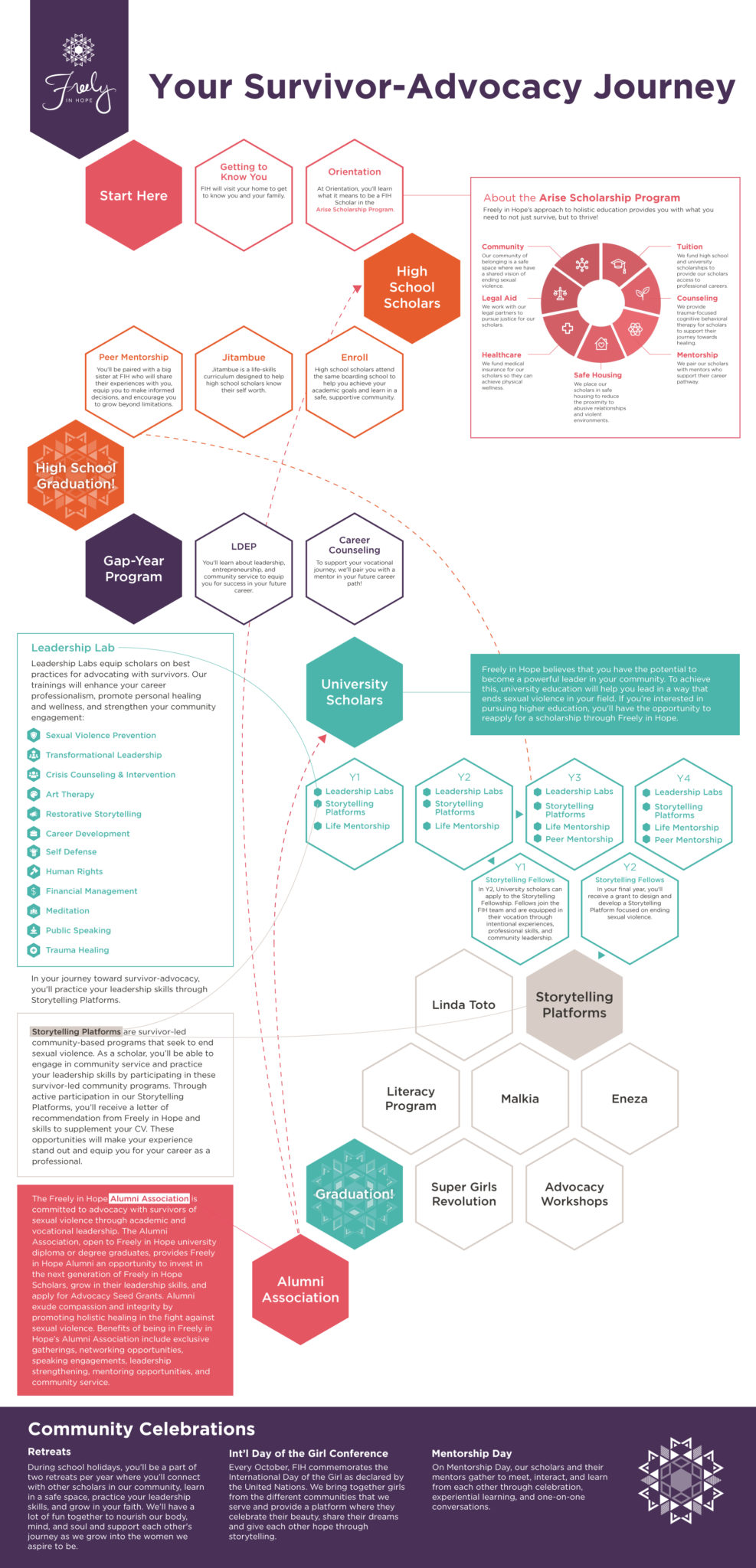
The Journey for Scholars

SEE THE JOURNEY OUR SCHOLARS TAKE

Freely in Hope provides holistic educational opportunities for young women affected by sexual violence. Our scholars are high school and university students passionate about using their education and careers to end sexual violence. Unlike merit-based scholarship programs, a scholar’s journey at Freely in Hope can last between 4-9 years! Scholars engage in a holistic approach to lead toward healing, transformation, and leadership. 
Want to help our scholars graduate as leaders that advocate against sexual violence?

Join the Hope Circle! As a member, your monthly donations literally encircle each scholar within Freely in Hope’s scholarship program — providing them with what they need to not just survive, but to thrive. 

Share with your friends

Q& A From Pain to Power – The Super Girls Revolution with Magdalene

As a survivor of sexual violence, I started SGR in my mother’s backyard because the need to ensure girls were supported through mentorship, education, and empowerment was so urgent. My dream was always consistent: to mentor girls to take up space and be leaders, allowing every light in the community to shine.

How Safe Spaces and Survivor-Led Care Are Multiplying Healing

The movement to end sexual violence is undergoing a profound and necessary transformation. For decades, the global conversation has often focused on external interventions and temporary aid. Today, a new, powerful model is emerging: one that centers the unshakeable wisdom, expertise, and leadership of African survivors. This isn’t just about inclusion; it is a strategic shift toward sustainability, efficacy, and genuine, lasting societal change.

How FIH Is Strengthening the Ecosystem of Care for Survivors in Kenya

Kenya’s fight against sexual and gender-based violence (SGBV) is far from over. Poverty, harmful cultural practices, lack of GBV awareness, lack of access to justice among others perpetuate violence in many Kenyan communities. In addition to that, survivors when seeking for help face stigma, fear and trauma not only from the violence itself but also from systems that are meant to provide protection, support and justice. Instead, the systems end up silencing them. As a result, it makes their healing difficult and the violence hidden.

JOIN OUR COMMUNITY

Sign up for our mailing list to receive the latest news from the field.

Skip to content